For our UK and USA film research, we decided to choose The Dark Knight(USA, directed by Christopher Nolan) and Cashback (UK, director Sean Ellis). There were lots of information on The Dark Knight, but we found it quite difficult to get any information on Cashback. The contrast between these films is massive - The Dark Knight is a typical Hollywood film with enormous budget, a great list of production and distribution companies, made for large audiences, but Cashback is probably a low budget film which was first made as a short film suitable for smaller audiences.
We found out that The Dark Knight had a budget of 185 million dollars, it was released on July 18, 2008 and was shown in 4366 cinemas. It hit an enormous $158,411,483 on the opening week only. By now, the total gross is $995,624,658 which makes it the 4th film in "Worldwide Gross" chart. We learnt that The Dark Knight was produced by Warner Bros. Pictures which is a widely known company, as well as Legendary Pictures, DC Comics and Syncopy, all of these have taken part in other well-known film productions. To get the audience, The Dark Knight was advertised massively through different marketing campaigns, one of them is WhySoSerious.com which was made like a quiz where fans had to do research and when they got the correct answer, they were moved to the next question. The Dark Knight marketing also includes series of posters, trailers, interviews with actors, TV adverts, Lottery tickets, Toys and even mobile phone add-ons.
We couldn't find any information of what the budget of Cashback was, but know that they had several distributors, The Works UK Distribution, in UK particularly. The production companies were small and two of them were probably set up just for this or another couple of films. Cashback was shown at various film festivals throughout the world showing that it was for a different audience than The Dark Knight.
Overall, the group work has helped to compare the massive difference between a large Hollywood film and a small, independent UK film.
Monday, 1 December 2008

Saturday, 1 November 2008
Analysis on sound
- A sequence from ''Into the Wild'' directed by Sean Penn. 2007, USA.
Wednesday, 22 October 2008
Notes on sound

- "Taxi Driver" by Martin Scorsese. 1976, USA.

- "Insomnia" by Christopher Nolan. 2002, USA.
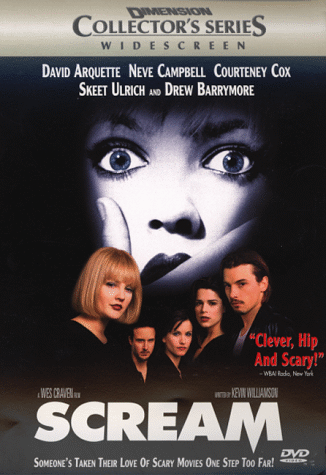
- "Scream" by Wes Craven. 1996, USA.

- "Eternal Sunshine Of The Spotless Mind" by Michel Gondry. 2004,
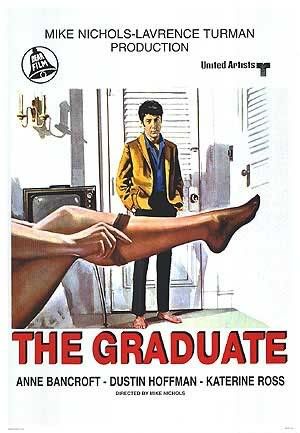
- "The Graduate" by Mike Nichols. 1967, USA.
Sound getting louder as the car comes nearer, it also sounds like the car is breaking and it is. A sudden music appears as the camera is filming the church, creating a sense of hope. People are shouting as the bride looks around, but there's no sound of the shouts, she hears only the man's voice. At the end when both characters are sitting in the bus, they are laughing but there is no sound of it.
Sunday, 5 October 2008
Analyzing cinematography in "I'm not There." by Todd Haynes

Description.
The beginning of the film, at first showing a white, overexposed table. The character is not visible in the shot because the spectator is looking through his eyes, it is set in a place that could be a backstage of a theatre or concert hall. There's a man showing direction, the character follows it through a corridor passing few people who are all looking directly into camera(are looking on him). Another man shows direction and the character follows him by going upstairs until gets on a stage. The stairway shot is similar to one that was in "Elephant" when the boy in the red sweater was going upstairs. The shot ends with a bright light, but we know that it is a stage because of the diegetic sound that comes from the audience.
Cinematography.
The scene is in black-and-white to give a more authentic look since it's a biography. The contrast is quite high, there are many overexposed and burnt out objects, the most contrasting part is between the backstage and stage itself - the image is going from almost black to white to emphasize what an artist is going through, the feeling of the unknown while in a backstage and the exposure when all eyes and lights are turned to you on a stage. Deep focus is used, background and foreground are both sharp. It's a point-of-view shot, because we see what characters eyes see, but not the character itself. Long shot that turns to medium close-up, so we can see the surroundings and people as well. The camera movement can be described as a tracking shot. The filming itself reminds me of "Requiem for a Dream", the scene when Jared Leto wakes up and we can see his point of view, also, the camera is braking rules and filming direct light.

Description.
A man that's meant to be Bob Dylan is filmed while playing his guitar and singing. The shot is set in a countryside environment. There's a big truck with men sitting in it, they could be farmers. This shot shows that Bob Dylan was an artist that speaks to the whole nation and writes about things that really do happen even in the most simple lives.
Cinematography.
Black-and-white shot, which is quite common in "I'm not There.". Average contrast, though there are highlighted and shadowed parts. Shallow focus which isn't clearly visible at the beginning, but shows very much when the camera has zoomed in actors face(close-up). Again, camera is braking the rules and filming direct light, there's an overexposed area. Camera is zooming from medium long shot to close up. Not much of a camera movement. The composition is heavier on the right side when showing a close up(the framing has been used to accent actors thoughtfulness).

Description.
This shot starts with an actor(Heath Ledger) who's smoking. He is located in a gallery and looking for someone. There's a woman in white coat running somewhere and Heath Ledger decides to follow her.
Cinematography.
Mostly blue tones used, showing that it's late and the gallery should be closed, but it's not because of an event that is happening in it. There are white lights coming from the window. Not a very high contrast, though there's a high difference between the lightest and darkest shade of blue. Shallow focus with a very blurred background, only silhouettes can be seen, at the beginning, but it turns into deep focus, so spectator now sees all the surroundings. Light drawing some parallel lines on the floor. Camera isn't moving, just zooming a little backwards when the actor has gone for a search. The beginning of the shot is similar to one with Christian Bale in it, which I wrote about earlier, because of the right side that's clearly heavier. Close up turning into a long shot. This shot is also similar to "Elephant" where one of the killers was running to get they guy in red sweater and his girlfriend, because of the blurring.

Description.
A room with people in it, staring on the person(Jude, played by Cate Blanchett) who's lying on the floor, they are all related to him. A surreal feeling and weird feeling is created, because the actors are barely moving. Some surroundings are visible - a painting, curtains, table and lamp. There's also a doctor who has finished looking at the person lying on the floor.
Cinematography.
Another black and white shot in "I'm not There.". The contrast is quite high, there's a visible difference between the grey tones. Deep focus, both background and foreground are sharp. Camera isn't moving, it's a point of view shot (camera is placed where characters eyes would be). A medium long shot, only half of the bodies are seen. Similar to what was in "Trainspotting" where Ewan McGregor was lying on the table, though there was a carpet which cropped the image from both sides. A bit of distortion, wide angle lens is probably used. The lack of movement is also like a slow motion, which is what we see when we are very tired(as the character was).

Description.
A hospital corridor with a nurse and a cleaner in the background and a head of a boy in the foreground. The nurse is coming straight to the boy. The settings remind me of some scenes from "Girl, Interrupted" where the interior of the hospital itself was seen.
Cinematography.
Not very bright colours used. Yellow and green are the dominants. Light is coming from the window and falling on the floor. Focus is on the background, the head is slightly blurred. A shallow depth of field. This is a long shot which turns to a medium close-up. Camera is staying in it's place, but moving from up to down, that makes it a tilt. Framing is almost symmetrical on both sides, the window is the central object in it.
Monday, 29 September 2008
Mise en scene in "Fargo"
- Directed by Joel Coen.
- 1996, USA.
The film starts with an almost empty, snow covered landscape with only brown road visible, which is similar to Hitchcock's "North by Northwest", because both of them symbolize emptiness and loneliness. The rest of the film also remains in winter. There are lots of shots with geometrical figures in them, like the one form birds eye where Jerry is going to his car which is in the middle of a snow covered field and there are trees surrounded by squares.
There are also several shots where you can see interior and exterior, for example, when the pregnant police officer is leaving her house, you can see her husband by the table and also a door with windows in it showing Marge getting in her car.
Mostly bald colours used, hardly any bright colour can be seen, except the red, which symbolizes death and blood that is going to be shed.
Brown colour on Jerry symbolizes his passiveness, it's not hard to see that he is easily bullied and gets no respect from others. His body language shows that he is weak, not comfortable with the questioning. He is wearing a suit all the time, but in the end the police catches him while he is wearing only pyjamas, meaning that he has lost everything.
There is a physical difference between the two kidnappers Gaear(the big guy) is cold and silent most of the time, while Carl is talkative and more of a human kind.
Quite a shocking film at first, but the humor that has been put in it makes it very enjoyable, loved the accents of the police officers. Overall, a good piece of film making because of the interesting shots, settings and characters, everything was well thought out, also a good usage of diegetic sounds mixed with non-diegetic.
Wednesday, 24 September 2008
Analysis on mise-en-scene.

- Ending scene of "Requiem for a Dream", directed by Darren Aronofsky, year 2000.
- Main characters are Sara Goldfarb (played by Ellen Burstyn), Harry Goldfarb (Jared Leto), Marion Silver (Jennifer Connelly) and Tyrone C. Love (Marlon Wayans).
Scene starts with Harry's daylight dream of him running on the pier to meet Marion. It looks like he is screaming but only the sound of ocean is heard. After stepping back, a fall occurs. He then wakes up in a crowded hospital room and a nurse sitting in front of him. The camera is breaking rules and filming direct light which comes from the window behind nurse. Harry's face is covered with shadows, his make-up is used to create a sense of misery and loss. Leto shows a truly emotional performance, he is certainly into his characteristic role.
A shot of a dark room and door opening letting the light in comes afterwards. The room is surrounded by different possessions which are hard to recognize because of the lack of light. Marion's characteristic journey and life in this film ends with her sleeping on the couch, wearing almost like yesterdays make-up and heavy clothes, light flowing from her right side, she then falls asleep.
Tyrone's final play is held in a prison where he is spending his first night, wearing a prisoners costume. His bed is surrounded by other bed on one side and a cabinet on the other. Tyrone seems to be in a pain, but tries to fall asleep, dreaming about his long since dead mother. Light is flowing from his right side.
The film closes with Sara falling asleep and dreaming about her being on television show where she gets a prize - her son Harry. The stage is crowded by many other people whose faces are brightened by stage lights. The last shot shows Sara hugging Harry while rays from spotlights have created and "X", which could mean that their union is now destroyed and Sara is just dreaming.
From the scene where Leto realises he has lost everything and starts to cry, diegetic sound is mixed with a song from the soundtrack("Lux Aeterna" by Clint Mansell).
In each character's last scene, they turn on their right side and pull their knees up to their stomach, assuming the fetal position. In his final scene, Harry tries to do the same, but his amputated arm doesn't allow him to.
After all, a great film, magnificent performances, brilliant lights and sound, leaves a high impact on the viewer. I recommend seeing it!
Wednesday, 10 September 2008
North by Northwest
Directed by Alfred Hitchcock. USA, 1959.
Action/Adventure/Mystery/Thriller.
*Interesting location that seems like a place in nowhere. Never-ending road, empty landscape, only few cars passing.
*Strange meeting of two characters and sense that something is going to happen, but it won't.
*Good usage of sound. Silence broken by diegetic sounds give the feeling of complete emptiness.
*Spectator is left wondering what's going to happen next.
*Estabilishing shots, close-ups, different angles. We see the actors point of view and then his facial expression.
Subscribe to:
Comments (Atom)