Wednesday, 11 March 2009

London to Brighton

Directed by Paul Andrew Williams, 2006.

  • Locations/settings: working class apartments. Fields and countryside, as well as Brighton Beach contrast to the city shots and give a sense of freedom, refugee. Establishing shots in each sequence. Duncan's house is white, washed-out and almost clinical, making an impression of purity, although we know that Duncan isn't pure at all. Joanne's red lipstick and hoodie contrast with the whiteness and suggest something bad is going to happen.
  • Narrative structure: woman's point-of-view. Throughout the film we get flashbacks and the story is pieced together. Almost till the end it's unclear what exactly has happened.
  • Characterisation: Kelly's character is developed into a mother-like figure. Joanne is the one who changes lives, as she helps Kelly to see some hope and makes the tough guy Stuart realise they have something in common. As Duncan dies, Stuart is free from his control(shown with the ability to smoke again). Male gender is dominate.
  • Ideology: hierarchy, the pyramids of life. Society is divided in three classes, where the upper class is in control of the other two. Entrapement is portrayed throughout the film and women are trying to escape. Working class enforced community - a sense that there is no way out. Exploitation - female prostitution. Violence towards women.
  • Genre features: diegetic sounds. "Moonlight Sonata" when filming Duncan's house - the most important moment of the film. Most of the film is dark, but when Kelly and Joanne go to the Brighton beach, it becomes lighter. The film is more cinematic than "Bullet Boy" and "Sweet Sixteen", as it no longer reminds so much of a documentary. Wide screen is used to create powerful close-ups. Similar to "Bullet Boy" and "Sweet Sixteen" as there's a desperation to escape. All the films explore different parts of working class lives - prostitution, guncrime, violence, drugs.

Wednesday, 4 March 2009

Notes on "Bullet Boy"


  • Directed by Saul Dibb, 2004.

Locations/settings: the film is set in London's outer part where the lower class lives. The flat creates a sense of being safe, almost like a haven, but it is very small, even claustrophobic and contrasting with the exterior. The scene of police breaking in and vandalising the flat takes away the safety.

Narrative structure: a spectatorship is created throughout the film, as the viewers are involved and witness everything through their own eyes. The events take place in few days time after Ricky comes out of the prison. Fast action.

Characterisation: the little boy, Curtis is a witnesser and the bullet boy. Ricky, his big brother, is an influencer. Mother is a strong female figure, making decisions, but her boyfriend is the saver or at least he tries to be one. Throughout the film, each of the characters is going through changes - at first, Ricky tries to escape his own life, but then gives up, Curtis, on the other hand, becomes more mature and grows up too quickly. His brother's actions make him realise what he wants to do with his own life. The male figures are depending on women. There are strong connections between the characters, for example, even though Ricky wants to leave, he decides to help Wisdom and gets in trouble himself.

Ideology: mostly back people are portrayed. White characters are complete opposites and almost authoritative figures. A strong belief in god is brought in by Mother's boyfriend. His mission is to introduce god to everyone. The preach scene is the first time when the Mother is seen in a religious place, showing her changes. The film tells about the lower class. Their lives are like never-ending circles from which nobody can escape.

Genre features: similar as "Sweet Sixteen" the film tells about the lower class. Both films portray young male characters trying to escape their lives. Mostly diegetic sounds can be heard to create a sense of realism. However, a sad piece of music is used to signify changes in the mood. Lots of contrasts can be seen, for example, when parallel action takes place - the dinner party hosted by Ricky's mother and the party at a night club. The film also links with "Sweet Sixteen" because it seems like male characters are the ones who tend to get in trouble. In both films, one of the character is in prison and a welcome-back party is hosted when they come out.

Tuesday, 3 March 2009

Contemporary Film Culture

Nowadays, film culture can be seen as not only cinema-going, but also online viewing and home cinema. This has raised questions whether cinema is dead, since viewing film at home is much cheaper, but I believe the cinematic experience cannot be created anywhere else.

Cinema-going.

An article from British Film Institute about cinema-going in Britain and how it has changed since 1900's:
http://www.bfi.org.uk/features/ultimatefilm/cinemagoing.html

Cinema-going has taken an important part in the film history, but it seems to be a bit forgotten. However, I think the attractions are sufficiently strong to attract audiences. First of all, cinema has always been a place that provides the best sound and image quality. Second, throughout years, cinema-going has been considered as a part of night-out. In the past, going to the cinema was considered to be the same as going to a theatre or opera. People dressed up and prepared to socialise with others who have come to the film. Nowadays, cinemas provide bars and restaurants, which means even more space and opportunities to meet with other people and discuss the film.


Online viewing.

Online viewing is one of the latest things that has come in the film culture. Since the internet has developed, the opportunity to watch films online has grown. There are now many websites to choose from, all providing different kinds of films in the best quality.

A website containing links to online filmviewing sites:
http://www.ovguide.com/movies.html


For a long time, parts of films have been available on the YouTube, but they have now decided to show full-length films from Metro-Goldwin-Mayer's archives.

The BBC artice:
http://news.bbc.co.uk/1/hi/technology/7720918.stm


Home cinema.

Home cinema has developed a lot in the last years. People can now watch HD television and create their own cinema at home, using the latest sound and image providing gadgets. Screen sizes have grown a lot and tapes have now been changed to much smaller and more useful CD's.

An article from The Guardian about concerns of the days of cinema-going being numbered:
http://www.guardian.co.uk/film/2006/jan/27/johnpatterson

Monday, 23 February 2009

Film Exhibition

An article about film exhibition:
http://www.filmreference.com/encyclopedia/Criticism-Ideology/Exhibition.html


To be continued...

Wednesday, 11 February 2009

Star Images

Images are often another way of promoting the star. The industry uploads images of stars attending different kinds of events, for example, film awards. Stars are also promoted positively through images of charity-like events which they are attending, paparazzi follows every step of the stars, making their lives a reality show - all these things gain popularity of actors and films they are seen in. Fans can also upload their images of the stars in fan based websites, sharing their stories.
Some websites with film star images:
http://www.allmoviestar.com/
http://www.mtv.com/movies/photo/
http://www.imdb.com/

Angelina Jolie.

She is undoubtedly one of the most famous actresses. Her life has been captured through massive amounts of images. She is best known for her stormy relationships and the help she gives to refugees around the world.

The UN Refugee Agency.

A warm welcome for UNHCR Goodwill Ambassador Angelina Jolie at Kakuma camp in Kenya. © UNHCR/M.Furrer - October 2002.

In 2001 Angelina Jolie was named Goodwill Ambassador for the UN Refugee Agency (UNHCR), since then she has traveled to different countries in need of help.

UNHCR Goodwill Ambassador Angelina Jolie talks to returnee women in Nangarhar province during her first visit to Afghanistan. © Getty Images/Marco Di Lauro

The Children.

Angelina Jolie with her adopted children Maddox, Zahara, Pax and her own daughter Shiloh at the time when she was pregnant with twins.

Due to her frequent visits to the third world countries, Jolie has seen many children living in awful conditions, so she decided to arrange adoptions. This has caused controversaries and discussions whether she can take care of so many children.

The Relationships.

On March 28, 1996, Jolie married British actor Johny Lee Miller, her co-star in the film Hackers. She attended her wedding in black leather pants and a white shirt, upon which she had written the groom's name in her blood. Jolie and Miller separated the following year and subsequently divorced on February 3, 1999.

She then married American actor Billy Bob Thornton, whom she had met on the set of Pushing Tin(1999), on May 5, 2000. As a result of their frequent public declarations of passion and gestures of love—most famously wearing one another's blood in vials around their necks—their relationship became a favorite topic of the entertainment media. Jolie and Thornton divorced on May 27, 2003.

In early 2005, Jolie was involved in a well-publicized Hollywood scandal when she was accused of being the reason for the divorce of actors Brad Pitt and Jennifer Aniston. The allegation was that she and Pitt had started an affair during filming of Mr. & Mrs. Smith (2005). She denied this on several occasions, but admitted that they "fell in love" on the set.

Film Reviews

Film reviews, consisting of an analysis and a rating, are produced both by critics and fans. Critic reviews can be found in newspapers, magazines and online. Mainly new releases are reviewed and the critics usually see the film once and only have a day or two to formulate their opinions. Critics have an important impact on the films, especially on certain genres. The plot summary and description of a film that makes up the majority of any film review can have an important impact on whether people decide to see a film. For prestige films with a limited release, such as independent dramas, the influence of reviews is extremely important. Poor reviews will often doom a film to obscurity and financial loss.


Online reviews.


There are some film review websites, for example:
http://www.empireonline.com/reviews/ - all of these provide both critic and viewer comments and ratings.


The Curious Case of Benjamin Button.


At first it seemed to me that this film is loved by critics, since it received 13 Academy Awards and 11 BAFTA nominations, however, the truth was different. From the 11 BAFTA nominations, it won just three: Best Makeup&Hair, Best Production Design and Best Visual Effects. I believe these were not the kind of wons everyone were hoping for, since "The Curious Case of Benjamin Button" was also nominated for categories such as Best Film, Best Director - David Fincher, Best Leading Actor - Brad Pitt, Best Cinematography - Claudio Miranda and Best Editing, basically, the kind of nominations film makers are working/hoping for. The critics reviews were sometimes completely opposite, for example, The Guardian gave it just one star, whereas Empire voted it the highest 5 stars.

Article from The Guardian http://www.guardian.co.uk/film/2009/feb/06/benjamin-button-brad-pitt-cate-blanchett

Article from Empire http://www.empireonline.com/reviews/review.asp?FID=10606

The funniest thing about these two is that they both are complete opposites, not only because of the 1 and 5 star rating, but because The Guardian says: "Brad Pitt and Cate Blanchett star in 166 minutes of twee tedium about a life lived backwards" whereas Empire: "Aptly for a film so concerned with time, Button is 13 minutes shy of three hours and just flies by. If this is Fincher selling out, can he sell out more often please?"

Wednesday, 21 January 2009

Film marketing

Film marketing is used by most film studios. They invest in expensive marketing campaigns to maximize target audience attendance of the released film early in the release cycle. Film marketing techniques are:

Television and radio
  • Trailers
  • On-set posters and action figures
  • Talk shows
  • Entertainment programs, news programs
  • Behind-the-scenes documentary shows
  • Advance trailers, longer previews, behind-the-scenes footage on rentals or DVDs
Internet


  • Studio-sponsored per-film websites
  • Viral marketing - free distribution of trailers on film-oriented websites

In print


  • Paid advertisements in newspapers, magazines and inserts in books
  • Cross-promotion of original book or novelization, including special printings or new cover jackets
  • Comic special editions or special episodes.


Advertising of “The Dark Knight”


The advertising of The Dark Knight started in May 2007 when 42 Entertainment began a viral marketing campaign using films tagline “Why So Serious?” They launched a website featuring a fictional political campaign of Harvey Dent. Throughout the pre-release period, fans were asked to complete tasks. On October 31, 2007, the film's website morphed into another scavenger hunt with hidden messages, instructing fans to uncover clues at certain locations in major cities throughout the United States, and to take photographs of their discoveries. The clues combined to reveal a new photograph of the Joker and an audio clip of him from the film saying "And tonight, you're gonna break your one rule." Completing the scavenger hunt also led to another website called Rory's Death Kiss (referencing the false working title of Rory's First Kiss), where fans could submit photographs of themselves costumed as the Joker. Those who sent photos were mailed a copy of a fictional newspaper called The Gotham Times, whose electronic version led to the discovery of numerous other websites.

WhySoSerious.com directed fans to find letters composing the Joker’s message "The only sensible way to live in this world is without rules," to send in photographs of these letters, and then featured their photos in a collage.


The Dark Knight's opening sequence, (showing a bank raid by the Joker) and closing montage of other scenes from the film, was screened with selected IMAX screenings of I Am Legend, which was released on December 14, 2007. A theatrical teaser was also released with non-IMAX showings of I Am Legend, and also on the official website. The sequence was released on the Blu-Ray edition of Batman Begins on July 8, 2008. Also on July 8, 2008, the studio released Batman: Gotham Knight, a direct-to-DVD animated film, set between Batman Begins and The Dark Knight and featuring six original stories, directed by Bruce Timm, co-creator and producer of Batman: The Animated Series.


When seeing this poster, there’s no doubt that it is another Batman film. The Bat symbol is used cleverly and even without the writing, everyone would know what the film is about. The poster also features Batman himself, looking arrogant but protective. The letters are quite small, however the star names appear bigger than the name of the director. Most attention is drawn on the release date – July 18 to build up tension. I believe the poster portrays a scene that hasn’t been featured in the film.


After the death of Heath Ledger, the marketing campaign began to focus on the Joker, revising some of its websites dedicated to promoting the film and posting a memorial tribute to Ledger on the film's official website and overlaying a black memorial ribbon on the photo collage in WhySoSerious.com. This poster shows a man who has turned his back towards the camera, however, everyone knows that it is the Joker since he is holding a knife and a play card. The scene behind him reminds of Gotham, where all the action takes place. There are no names on the poster, except for the studio names and distributor. The title has been kept small, but everyone knows it since it features the bat symbol.

Wednesday, 7 January 2009

Cult Films

Top 50 Cult Films :
Gives a short information or commentary about every film.
Cult Film Site:
Information about any cult film, it's possible to do a research through the database, biographies and filmographies of different directors associated with cult films, several categories to make the research easier.
Amazon.com Cult Film site:
List of DVD's available to buy from Amazon.com.
Directors with Cult status:
Information about directors associated with Cult films.

Monday, 1 December 2008

Summary of group research

For our UK and USA film research, we decided to choose The Dark Knight(USA, directed by Christopher Nolan) and Cashback (UK, director Sean Ellis). There were lots of information on The Dark Knight, but we found it quite difficult to get any information on Cashback. The contrast between these films is massive - The Dark Knight is a typical Hollywood film with enormous budget, a great list of production and distribution companies, made for large audiences, but Cashback is probably a low budget film which was first made as a short film suitable for smaller audiences.
We found out that The Dark Knight had a budget of 185 million dollars, it was released on July 18, 2008 and was shown in 4366 cinemas. It hit an enormous $158,411,483 on the opening week only. By now, the total gross is $995,624,658 which makes it the 4th film in "Worldwide Gross" chart. We learnt that The Dark Knight was produced by Warner Bros. Pictures which is a widely known company, as well as Legendary Pictures, DC Comics and Syncopy, all of these have taken part in other well-known film productions. To get the audience, The Dark Knight was advertised massively through different marketing campaigns, one of them is WhySoSerious.com which was made like a quiz where fans had to do research and when they got the correct answer, they were moved to the next question. The Dark Knight marketing also includes series of posters, trailers, interviews with actors, TV adverts, Lottery tickets, Toys and even mobile phone add-ons.
We couldn't find any information of what the budget of Cashback was, but know that they had several distributors, The Works UK Distribution, in UK particularly. The production companies were small and two of them were probably set up just for this or another couple of films. Cashback was shown at various film festivals throughout the world showing that it was for a different audience than The Dark Knight.
Overall, the group work has helped to compare the massive difference between a large Hollywood film and a small, independent UK film.

Saturday, 1 November 2008

Analysis on sound

  • A sequence from ''Into the Wild'' directed by Sean Penn. 2007, USA.
This sequence starts with an image of a field and there's off-screen sound from a tractor, which appears seconds later. There are voices which become louder as soon as the persons appear. The sound of the tractor also becomes louder as the camera jumps closer, this is to convey a feeling of the noisy process of gathering the crops. Diegetic sound is mixed with non-diegetic, as a song starts to play. The sound creates a realistic feeling as the camera films two men from the outside of the tractor, their voices are not so loud as the sound of the tractor. The song becomes louder and then bridges with the next shot when the same men are in a pub, then it disappears and the voices become louder. There are off-screen sounds of men talking. We can hear diegetic sounds from cards falling, doors opening and closing, this, again, creates a realistic feeling for the spectator.

Wednesday, 22 October 2008

Notes on sound

  • "Taxi Driver" by Martin Scorsese. 1976, USA.
The music is like a prologue, there are different styles of it. At first, the sound gets louder as the picture becomes clearer, then showing a car. The song is similar to one in "Psycho" by Alfred Hitchcock. There are low drum beats at times, which suggest that the character is going to do something extreme and he has a split personality. There are sound bridges between the scenes, also off-screen diegetic sounds in a heightened sense. The music is reaching out to the audience.

  • "Insomnia" by Christopher Nolan. 2002, USA.
The music matches the theme and reflects to death of a young girl. Sound is showing a man falling asleep, then suddenly waking up as there's a sound jump from the plane entering air pocket. Stabbing noises as the credits appear. Sound is introducing the character to another place.

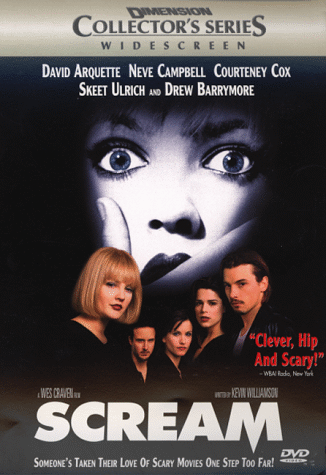
  • "Scream" by Wes Craven. 1996, USA.
There are shocking moments of the sound usage to scare the viewers. Volume is rising, as the woman gets more scared, for example, the telephone ring seems louder, this is to recreate the expierience of being alone and scared in your own home. Viseral sounds make the viewers even more scared.

  • "Eternal Sunshine Of The Spotless Mind" by Michel Gondry. 2004,
Diegetic sound of someone closing the doors of a car, then starting the engine. A song starts to play when camera is filming the window. There are sound bridges between the scenes, but at one point it cuts out and the next scene appears with diegetic sounds only. There is a sonic flashback and some voice overs. The music is helping to establish the genre. Everyday sounds are rising and getting louder, to emphasise the feelings of the character, as he gets annoyed with everything easely.


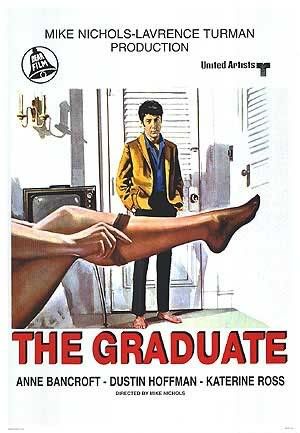
  • "The Graduate" by Mike Nichols. 1967, USA.

Sound getting louder as the car comes nearer, it also sounds like the car is breaking and it is. A sudden music appears as the camera is filming the church, creating a sense of hope. People are shouting as the bride looks around, but there's no sound of the shouts, she hears only the man's voice. At the end when both characters are sitting in the bus, they are laughing but there is no sound of it.

Sunday, 5 October 2008

Analyzing cinematography in "I'm not There." by Todd Haynes


Description.

The beginning of the film, at first showing a white, overexposed table. The character is not visible in the shot  because the spectator is looking through his eyes, it is set in a place that could be a backstage of a theatre or concert hall. There's a man showing direction, the character follows it through a corridor passing few people who are all looking directly into camera(are looking on him). Another man shows direction and the character follows him by going upstairs until gets on a stage. The stairway shot is similar to one that was in "Elephant" when the boy in the red sweater was going upstairs. The shot ends with a bright light, but we know that it is a stage because of the diegetic sound that comes from the audience.

Cinematography.

The scene is in black-and-white to give a more authentic look since it's a biography. The contrast is quite high, there are many overexposed and burnt out objects, the most contrasting part is between the backstage and stage itself - the image is going from almost black to white to emphasize what an artist is going through, the feeling of the unknown while in a backstage and the exposure when all eyes and lights are turned to you on a stage. Deep focus is used, background and foreground are both sharp. It's a point-of-view shot, because we see what characters eyes see, but not the character itself. Long shot that turns to medium close-up, so we can see the surroundings and people as well. The camera movement can be described as a tracking shot. The filming itself reminds me of "Requiem for a Dream", the scene when Jared Leto wakes up and we can see his point of view, also, the camera is braking rules and filming direct light.


Description.

A man that's meant to be Bob Dylan is filmed while playing his guitar and singing. The shot is set in a countryside environment. There's a big truck with men sitting in it, they could be farmers. This shot shows that Bob Dylan was an artist that speaks to the whole nation and writes about things that really do happen even in the most simple lives. 

Cinematography.

Black-and-white shot, which is quite common in "I'm not There.". Average contrast, though there are highlighted and shadowed parts. Shallow focus which isn't clearly visible at the beginning, but shows very much when the camera has zoomed in actors face(close-up). Again, camera is braking the rules and filming direct light, there's an overexposed area. Camera is zooming from medium long shot to close up. Not much of a camera movement. The composition is heavier on the right side when showing a close up(the framing has been used to accent actors thoughtfulness). 


Description.

This shot starts with an actor(Heath Ledger) who's smoking. He is located in a gallery and looking for someone. There's a woman in white coat running somewhere and Heath Ledger decides to follow her. 

Cinematography.

Mostly blue tones used, showing that it's late and the gallery should be closed, but it's not because of an event that is happening in it. There are white lights coming from the window. Not a very high contrast, though there's a high difference between the lightest and darkest shade of blue. Shallow focus with a very blurred background, only silhouettes can be seen, at the beginning, but it turns into deep focus, so spectator now sees all the surroundings. Light drawing some parallel lines on the floor. Camera isn't moving, just zooming a little backwards when the actor has gone for a search. The beginning of the shot is similar to one with Christian Bale in it, which I wrote about earlier, because of the right side that's clearly heavier. Close up turning into a long shot. This shot is also similar to "Elephant" where one of the killers was running to get they guy in red sweater and his girlfriend, because of the blurring.


Description.

A room with people in it, staring on the person(Jude, played by Cate Blanchett) who's lying on the floor, they are all related to him. A surreal feeling and weird feeling is created, because the actors are barely moving. Some surroundings are visible - a painting, curtains, table and lamp. There's also a doctor who has finished looking at the person lying on the floor.

Cinematography.

Another black and white shot in "I'm not There.". The contrast is quite high, there's a visible difference between the grey tones. Deep focus, both background and foreground are sharp. Camera isn't moving, it's a point of view shot (camera is placed where characters eyes would be). A medium long shot, only half of the bodies are seen. Similar to what was in "Trainspotting" where Ewan McGregor was lying on the table, though there was a carpet which cropped the image from both sides. A bit of distortion, wide angle lens is probably used. The lack of movement is also like a slow motion, which is what we see when we are very tired(as the character was).


Description.

A hospital corridor with a nurse and a cleaner in the background and a head of a boy in the foreground. The nurse is coming straight to the boy. The settings remind me of some scenes from "Girl, Interrupted" where the interior of the hospital itself was seen.

Cinematography.

Not very bright colours used. Yellow and green are the dominants. Light is coming from the window and falling on the floor. Focus is on the background, the head is slightly blurred. A shallow depth of field. This is a long shot which turns to a medium close-up. Camera is staying in it's place, but moving from up to down, that makes it a tilt. Framing is almost symmetrical on both sides, the window is the central object in it.


Monday, 29 September 2008

Mise en scene in "Fargo"


  • Directed by Joel Coen.
  • 1996, USA.
The film starts with an almost empty, snow covered landscape with only brown road visible, which is similar to Hitchcock's "North by Northwest", because both of them symbolize emptiness and loneliness. The rest of the film also remains in winter. There are lots of shots with geometrical figures in them, like the one form birds eye where Jerry is going to his car which is in the middle of a snow covered field and there are trees surrounded by squares. 

There are also several shots where you can see interior and exterior, for example, when the pregnant police officer is leaving her house, you can see her husband by the table and also a door with windows in it showing Marge getting in her car.

Mostly bald colours used, hardly any bright colour can be seen, except the red, which symbolizes death and blood that is going to be shed.

Brown colour on Jerry symbolizes his passiveness, it's not hard to see that he is easily bullied and gets no respect from others. His body language shows that he is weak, not comfortable with the questioning. He is wearing a suit all the time, but in the end the police catches him while he is wearing only pyjamas, meaning that he has lost everything.

There is a physical difference between the two kidnappers Gaear(the big guy) is cold and silent most of the time, while Carl is talkative and more of a human kind.

Quite a shocking film at first, but the humor that has been put in it makes it very enjoyable, loved the accents of the police officers.  Overall, a good piece of film making because of the interesting shots, settings and characters, everything was well thought out, also a good usage of diegetic sounds mixed with non-diegetic. 

Wednesday, 24 September 2008

Analysis on mise-en-scene.


  • Ending scene of "Requiem for a Dream", directed by Darren Aronofsky, year 2000.

  • Main characters are Sara Goldfarb (played by Ellen Burstyn), Harry Goldfarb (Jared Leto), Marion Silver (Jennifer Connelly) and Tyrone C. Love (Marlon Wayans).


Scene starts with Harry's daylight dream of him running on the pier to meet Marion. It looks like he is screaming but only the sound of ocean is heard. After stepping back, a fall occurs. He then wakes up in a crowded hospital room and a nurse sitting in front of him. The camera is breaking rules and filming direct light which comes from the window behind nurse. Harry's face is covered with shadows, his make-up is used to create a sense of misery and loss. Leto shows a truly emotional performance, he is certainly into his characteristic role.


A shot of a dark room and door opening letting the light in comes afterwards. The room is surrounded by different possessions which are hard to recognize because of the lack of light. Marion's characteristic journey and life in this film ends with her sleeping on the couch, wearing almost like yesterdays make-up and heavy clothes, light flowing from her right side, she then falls asleep.


Tyrone's final play is held in a prison where he is spending his first night, wearing a prisoners costume. His bed is surrounded by other bed on one side and a cabinet on the other. Tyrone seems to be in a pain, but tries to fall asleep, dreaming about his long since dead mother. Light is flowing from his right side.


The film closes with Sara falling asleep and dreaming about her being on television show where she gets a prize - her son Harry. The stage is crowded by many other people whose faces are brightened by stage lights. The last shot shows Sara hugging Harry while rays from spotlights have created and "X", which could mean that their union is now destroyed and Sara is just dreaming.


From the scene where Leto realises he has lost everything and starts to cry, diegetic sound is mixed with a song from the soundtrack("Lux Aeterna" by Clint Mansell).


In each character's last scene, they turn on their right side and pull their knees up to their stomach, assuming the fetal position. In his final scene, Harry tries to do the same, but his amputated arm doesn't allow him to.


After all, a great film, magnificent performances, brilliant lights and sound, leaves a high impact on the viewer. I recommend seeing it!

Wednesday, 10 September 2008

North by Northwest

Directed by Alfred Hitchcock. USA, 1959.
Action/Adventure/Mystery/Thriller.


*Interesting location that seems like a place in nowhere. Never-ending road, empty landscape, only few cars passing.

*Strange meeting of two characters and sense that something is going to happen, but it won't.

*Good usage of sound. Silence broken by diegetic sounds give the feeling of complete emptiness.

*Spectator is left wondering what's going to happen next.

*Estabilishing shots, close-ups, different angles. We see the actors point of view and then his facial expression.